Mattress materials
Latex Mattress Feel: Resilience, Airflow, and What to Consider
A latex mattress answers pressure quickly. Instead of slowly yielding around the body, it compresses, supports, and springs back—an animated, buoyant sensation that some sleepers love and others find too lively. The feel depends on more than the word “latex” on a label: firmness, layer design, latex-making method, cover materials, and the sleeper’s own body all play a part.
Understanding those details can turn a vague impression into a practical decision. Here’s what to expect from latex, how to compare mattress construction, and what to check before choosing one for your bedroom.
What does a latex mattress feel like?
Picture the difference between sinking into a deep cushion and resting on a flexible surface that pushes back. Latex is generally associated with the second experience. It compresses under weight, then rebounds promptly as pressure shifts. The result is often described as springy, buoyant, or responsive.
That response can make it easier to turn over or change positions without feeling that the mattress is holding you in a hollow. It may also create a sense of support close to the surface: the body is cushioned, but the material does not necessarily produce the slow, enveloping contouring associated with some memory foam designs.
These are tendencies, not guarantees. Latex mattresses vary in firmness, thickness, layer arrangement, and upholstery. A soft comfort layer can feel plush; a firm core can feel quite supportive. Covers, quilting, and materials such as wool can further change the first impression. “Latex feel” is a useful starting point, not a precise description of every mattress.
Personal preference matters just as much as construction. A sleeper who enjoys a surface that promptly follows their movements may appreciate latex’s liveliness. Someone seeking a still, close-fitting cradle may prefer a different material or a latex mattress with a softer, more pressure-relieving top layer.
Resilience: support that moves with you
Resilience is the material’s ability to recover after compression. In a mattress, that recovery contributes to the characteristic bounce of latex. When a sleeper shifts from their side to their back, the surface tends to respond quickly rather than remaining compressed for a long moment.
This can be helpful for people who change positions during the night, or for those who dislike the feeling of being deeply settled into a mattress. The surface can feel easier to move across, while the mattress continues to provide support beneath the areas carrying the most weight. A resilient feel may also make getting in and out of bed feel less effortful for some people, though that depends on the mattress height, firmness, and the sleeper’s mobility.
Responsive does not mean universally comfortable. A mattress that pushes back can feel too firm or buoyant to someone who wants a close contour around the shoulders and hips. Nor does bounce alone establish that a mattress provides appropriate support. Comfort and alignment are individual; the relevant question is whether the whole construction lets the sleeper rest without persistent pressure or discomfort.
Resilience can influence how motion is experienced by a partner, too. Latex compresses and recovers locally, but no material makes movement disappear entirely. Mattress size, layer design, foundation, and how easily either sleeper is disturbed all affect the experience. If motion sensitivity is important, look for clear descriptions or a trial period that gives both sleepers time to assess the mattress at home.
Airflow and temperature: look beyond one material name
Latex is often considered breathable, but a mattress is a layered system. Airflow through or around the latex is only one piece of the temperature picture. The cover, quilting, nearby bedding, room conditions, and the sleeper’s own temperature preferences can make a substantial difference.
Latex foam may be made with openings or channels that contribute to air movement. The way a mattress is assembled matters: a thick quilted cover can change the surface sensation, while dense layers and a protective encasement may affect how easily heat and moisture move away. A protector, fitted sheet, duvet, and bedroom ventilation each play a role as well.
Natural fibers used in the cover or quilting may influence the feel of the sleep surface and how it manages moisture. Some mattresses use wool in the upholstery; others rely on cotton or different materials. That does not guarantee that a particular sleeper will sleep cool. Temperature comfort varies, and claims such as “cooling” or “temperature regulating” should be treated as design descriptions rather than promises of a fixed result.
If you tend to overheat, assess the full setup. Check the mattress specifications for cover and comfort-layer materials, consider whether the protector is breathable, and avoid assuming that a latex core alone determines the temperature of the bed. Lightweight bedding and a comfortable room environment can matter as much as the mattress choice.
Firmness is not the same as support
Firmness describes how the mattress feels at the surface; support is about how well the construction accommodates and holds the body. The terms are often blurred in marketing, but they answer different questions. A mattress can feel soft at first contact yet have supportive layers underneath. Another can feel firm without being the right fit for a particular person.
There is no single firmness level that works for every sleeper or sleep position. Side sleepers often pay close attention to pressure at the shoulders and hips. Back sleepers may focus on whether the surface feels balanced across the body. Stomach sleepers may want to consider whether the midsection sinks more than is comfortable. These are useful prompts, not rules that can replace individual testing.
Body weight also affects how a mattress is experienced. The same latex layer may compress differently for different people, so a firmness label is best read as a general guide. Couples with different preferences can look for mattresses that allow separate layer choices by side, where available, or consider whether one compromise feel is acceptable to both.
When possible, spend enough time on a mattress to notice more than its first few minutes. Lie in your usual positions and pay attention to pressure, ease of movement, and whether you feel comfortably supported. If shopping online, review the trial, exchange, return, and warranty terms before buying. A label such as “medium” is not a substitute for a clear policy.
Dunlop and Talalay: different processes, not simple quality rankings
Latex mattresses may use Dunlop latex, Talalay latex, or a combination. These names describe different manufacturing processes. They can be associated with differences in feel and construction, but neither name on its own tells you whether a mattress will suit your body or preferences.
Dunlop latex is produced through a process that results in a dense, resilient foam. Talalay latex uses additional processing steps, including expansion and freezing, before the material is cured. Finished products can differ in weight, feel, and firmness, but the outcome also depends on the formulation and how the latex is used in the mattress.
Some constructions place one type in a particular layer; others use a single type throughout. A mattress can also combine latex layers of differing firmness. The useful questions are practical: What latex is used? Where is it placed? What is the firmness of each layer? Is the stated material description specific enough to understand what you are buying?
For example, the Naturally Organic Hudson Latex Mattress is described as an eight-inch mattress with a five-inch firm organic Dunlop latex support layer and a three-inch medium organic Dunlop latex layer above it. Its product information also lists organic cotton and wool in the cover and quilting. That illustrates why a construction breakdown is more useful than the word “latex” alone: the arrangement and materials offer a clearer picture of what the sleeper is considering.
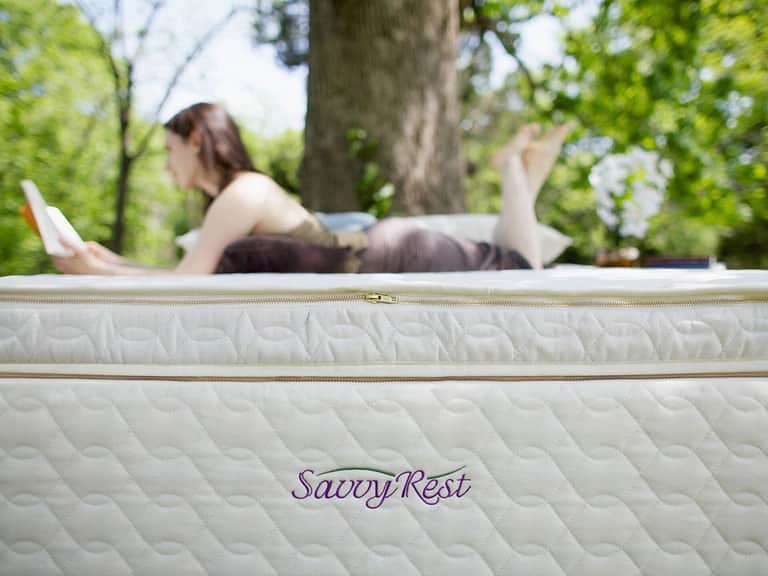
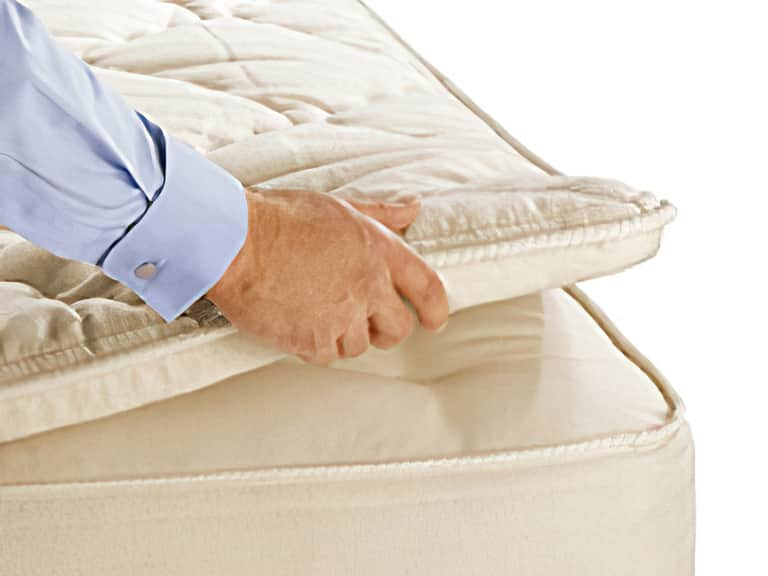
Another example is the Savvy Rest Unity Pillowtop Latex Mattress, which combines a layered mattress with a separate soft latex pillowtop. Its layers can be selected by firmness, and the product information describes different configuration options, including customization by side in queen and king sizes. The additional layer and customization make the design distinct from a simpler, fixed-layer latex mattress.
Read material claims with care
“Latex” identifies a material category, but it does not settle questions about origin, processing, certification, or the composition of every component in a mattress. Natural, synthetic, and blended latex are not interchangeable descriptions. If sourcing matters to you, look for specific statements about the latex itself and check whether an independent certification applies to the material or finished product.
Certification language can be useful, but read its scope. A certificate may cover a specific material, component, or manufacturing standard rather than every part of the mattress. Ask what is certified, by whom, and whether the certificate is current. Terms such as “organic,” “natural,” and “non-toxic” should not be treated as self-explanatory proof of every claim a shopper might infer.
Also review the full bill of materials where available. A mattress can include latex along with fabric, wool, adhesives, or other components. If you have a known sensitivity, allergy, or health concern related to a material, contact the manufacturer for precise information and seek guidance from an appropriate health professional. A product description cannot assess an individual medical risk.
Transparency is part of a good comparison. Clear layer descriptions, stated dimensions, care instructions, and accessible warranty terms make it easier to distinguish a well-documented product from one relying mainly on broad marketing language.
Construction changes the experience
Latex mattresses may be built as a single core, a stack of layers, or a layered system with a distinct topper. Layer thickness and firmness determine how quickly the sleeper meets firmer support beneath the surface. A soft upper layer can relieve pressure; a firmer base can provide a more substantial feel. The same materials arranged differently can produce noticeably different experiences.
Some layered designs permit owners to rearrange or replace components, depending on the manufacturer’s specifications. That flexibility can be useful when firmness needs are uncertain, but it brings practical questions: Can the cover be opened? Are layers easy to move? Is a layer exchange covered, and within what time frame? Does the warranty require a particular foundation or care routine?
A mattress with a pillowtop or separate topper may have a more pronounced cushioned surface than a streamlined, uniform design. The added layer can affect mattress height and sheet fit. Before choosing a thicker build, check the depth of your fitted sheets and consider how the height works with the bed frame, mobility needs, and room setup.
Foundation compatibility matters as well. Follow the manufacturer’s instructions for slats, platform surfaces, or adjustable bases. An unsuitable support surface can affect how a mattress performs and may have implications for its warranty. Do not assume every latex mattress can be placed on every bed frame.
Care, weight, and everyday practicality
Latex mattresses can be heavy, especially when they contain thick layers and substantial fabric covers. This affects delivery, bedroom setup, and the effort involved in moving or rotating the mattress. If stairs, tight turns, or limited assistance are part of the move, ask about delivery arrangements and whether the mattress arrives as one piece or in components.
Care instructions vary. Many mattress covers are not designed to be removed or machine washed, so check the label before attempting to clean one. Use a compatible protector if you want a washable barrier against ordinary spills and wear, and follow the manufacturer’s guidance for spot cleaning. Avoid soaking latex or using cleaning agents that the instructions do not recommend.
Rotation requirements differ by design. Some mattresses are intended to be rotated periodically; others have a specific top and bottom and should not be flipped. Check the instructions rather than relying on a general habit. Regularly inspect the foundation and keep the mattress dry and adequately supported.
Warranty length is only one part of durability planning. Read what is covered, what counts as a defect, and what exclusions apply. Understand the return or comfort-exchange process separately: a warranty generally addresses specified product issues, not every mismatch in personal comfort.
A practical comparison checklist
When comparing latex mattresses, put the specifications side by side. The aim is not to chase the longest list of features, but to find a construction that fits your comfort preferences, household needs, and budget.
- Feel: Does the mattress emphasize buoyant responsiveness, plush cushioning, or a firmer surface?
- Layer details: What materials and firmness levels are used in the comfort and support layers?
- Latex description: Is it identified as Dunlop, Talalay, natural, synthetic, blended, or another specific formulation?
- Cover and quilting: Which fibers and other materials are used at the surface, and how do they affect care?
- Sleep position and pressure: Can you test the mattress in the positions you actually use?
- Temperature: What does the full mattress construction say about airflow, and how will it work with your bedding?
- Foundation: What base is required or recommended, and is your existing frame compatible?
- Care and weight: Can you manage delivery, setup, rotation, and cleaning requirements?
- Policies: What are the trial, exchange, return, and warranty terms, and what costs or conditions apply?
If possible, test the mattress in person. If that is not practical, seek detailed product specifications and make sure the return policy is understandable before purchase. A comfortable decision comes from weighing the whole experience, not from one headline feature.
Who may appreciate latex—and who may not
Latex may appeal to sleepers who like a responsive surface, prefer not to sink deeply, or move between positions during the night. Its buoyant quality can be a welcome contrast for people who find slower-contouring materials restrictive. A layered design can also give shoppers a way to compare different firmness arrangements, where the mattress allows it.
It may be less appealing to people who want a deep, slow-adapting cradle or who are especially sensitive to bounce. Those sleepers should not rule out every latex mattress, but should pay close attention to the upper layers, firmness, and any separate topper. A plush construction may feel quite different from a firm, uniform latex core.
Neither material nor firmness can guarantee pain relief, improved sleep, or a particular health outcome. Mattress choice is one part of a sleep environment, and persistent pain or sleep difficulty deserves appropriate professional attention. The most useful standard is personal: does the mattress feel comfortable and supportive over the course of ordinary nights?
The bottom line
Latex is known for a quick, resilient response—a surface that compresses and rebounds rather than lingering in a deep impression. That quality can make movement feel easy and support feel close at hand, but it is not automatically the right sensation for every sleeper. Firmness, layer design, cover materials, and individual comfort preferences all shape the result.
Compare more than a material name. Look for a clear account of latex type, layer arrangement, firmness, cover construction, foundation requirements, and care. Consider airflow as a feature of the entire bed rather than a promise attached to one component. Then test the mattress, or study the trial and return terms closely, with your actual sleep habits in mind.
A proper mattress is not the one with the most dramatic claim. It is the one whose feel, construction, and practical demands make sense for the person who will sleep on it.